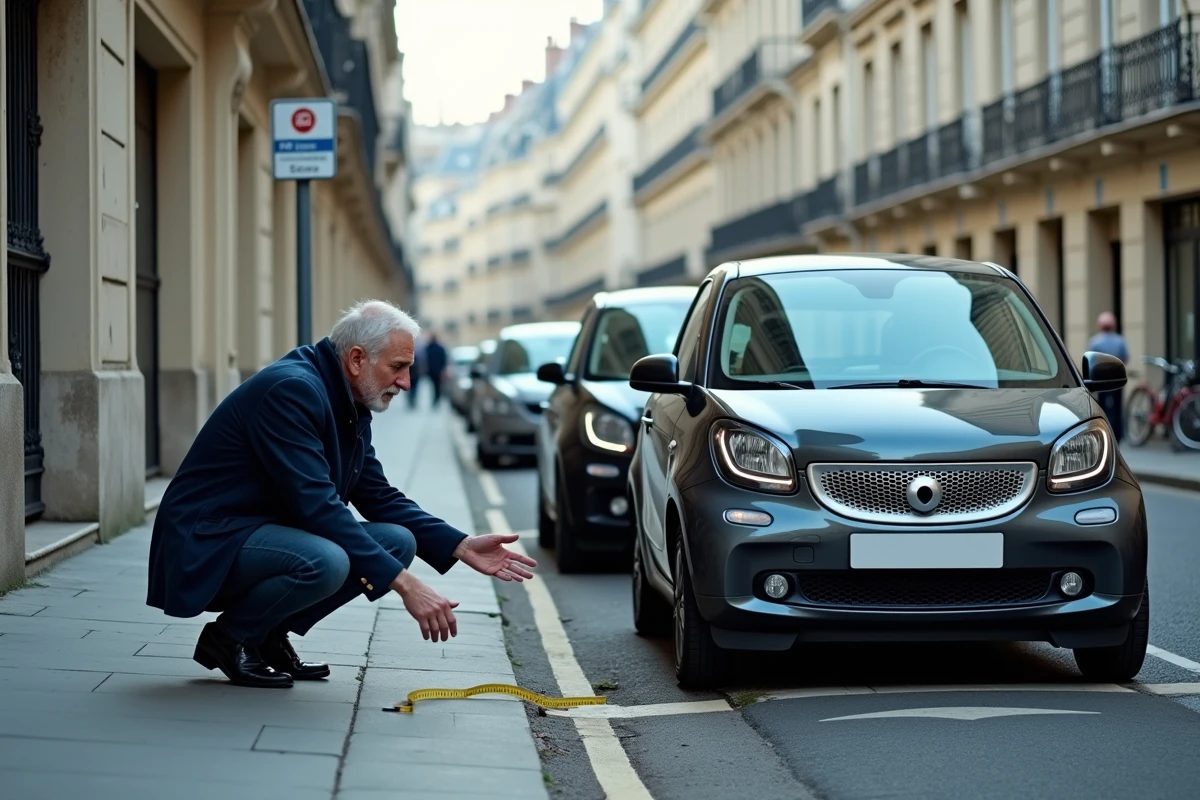
The French Highway Code precisely regulates the safe distances between vehicles in circulation. For parking, the situation is more ambiguous: no article specifies a numerical gap in centimeters between two parked cars. This lack of an explicit threshold generates neighborhood conflicts, insurance disputes, and recurring bodywork damage to bumpers.
Parking and the Highway Code: what the texts really provide
Article R417-1 of the Highway Code requires the driver to park their vehicle without obstructing traffic or endangering other users. The notion of distance between two parked cars is not mentioned in terms of a metric value. No text specifies a number of centimeters to be respected between two vehicles in longitudinal or angled parking.
The obligations focus more on overall positioning: not parking in double rows, respecting ground markings, and leaving sufficient passage for pedestrians and other vehicles. The interval between two parked cars therefore relies on common sense and, in case of a dispute, the judgment of an officer or an insurance expert.
To delve deeper into this regulatory framework, you can consult the parking distance between 2 cars on L’Actu Auto, which details the driver’s obligations when parking.

Bumpers against bumpers: where parking fault begins
The absence of a legal specified distance does not mean that a driver can park too close to the neighboring vehicle without consequences. Civil law takes over from the Highway Code. Any contact with another vehicle, even when stationary, constitutes a reportable material incident to the insurance.
In longitudinal parking (parallel), the common practice is to leave enough space for the vehicle in front and the one behind to exit their spots without excessive maneuvering. When this space is reduced to a few centimeters, the risk of hitting a bumper when departing increases significantly.
The interval in angled or perpendicular parking
In angled parking, spaces are defined by ground markings. The space between two vehicles then depends on the width of the parking spot, generally calibrated for standard sizes. A wide SUV or a utility vehicle can overflow into the adjacent spot and reduce the interval to the point of preventing the opening of doors.
Obstructing access to the neighboring vehicle can be classified as abusive parking by a sworn officer, even if the vehicle remains within the limits of the markings. Jurisprudence considers the notion of characterized obstruction, assessed on a case-by-case basis.
Powered tailgates of electric vehicles: a regulatory blind spot in parking
Recent electric SUVs come equipped with powered tailgates whose opening range often exceeds that of equivalent thermal models. This rear swing, sometimes very wide, poses a concrete problem in angled parking: the tailgate, once opened, encroaches on the traffic lane or the space of the parked vehicle behind.
Parking guides overlook this use case. Ground markings are sized for overall vehicle lengths, not for the sweep radius of an open tailgate. A driver who parks their electric vehicle perfectly within the lines may find themselves unable to access their trunk without encroaching on the rear space.
When the open trunk exceeds the parking space
The powered tailgate adds a usage constraint absent from the Highway Code. No text provides for an additional margin for rear opening. Manufacturers sometimes include a maximum height adjustment for opening, but this function targets low-ceiling underground parking, not longitudinal encroachment.
In practice, several situations generate conflicts:
- The powered tailgate hits the bumper of the parked vehicle behind during automatic opening, causing an incident without a witness.
- The driver must back out of their spot to open their trunk, temporarily blocking the parking lane.
- The tailgate’s obstacle sensors detect the rear vehicle and block the opening, making the trunk inaccessible as long as the car remains parked in a tight angle.
This gap between the growing sizes of vehicles and the fixed dimensions of parking spaces is not subject to any specific regulation. Field feedback varies on this point: some private parking lots are beginning to widen their spaces, while others are not.
Liability and insurance: who pays when space is lacking
A parking collision between two vehicles falls under the classic amicable report. The responsibility lies with the moving vehicle, even if the space left by the parked vehicle was very limited. The driver performing the maneuver (parallel parking, exiting a spot, opening a tailgate) is presumed responsible for the contact.
The insurer examines the circumstances: position of the vehicles, presence of markings, testimonies. The absence of a specified regulatory distance complicates the defense of a driver who believes that the neighboring vehicle was parked too close. Without a text to invoke, the obstruction remains subjective.
The case of hit-and-run in parking
Leaving the scene after touching a parked vehicle, even slightly, constitutes a hit-and-run offense punishable by criminal penalties. Leaving a note on the windshield does not replace an amicable report. The proliferation of surveillance cameras in parking lots has made these situations more traceable than before.
The reflex to adopt remains to photograph the scene, fill out a report if the owner is present, or notify law enforcement in their absence. The space between vehicles, however small, does not constitute a mitigating circumstance for the one causing the contact.
The distance between two parked cars remains a blind spot in the French Highway Code. The texts frame obstruction and danger, not the gap in centimeters. With vehicles becoming wider and equipment like ultra-long powered tailgates, the gap between parking standards and actual sizes is only increasing.