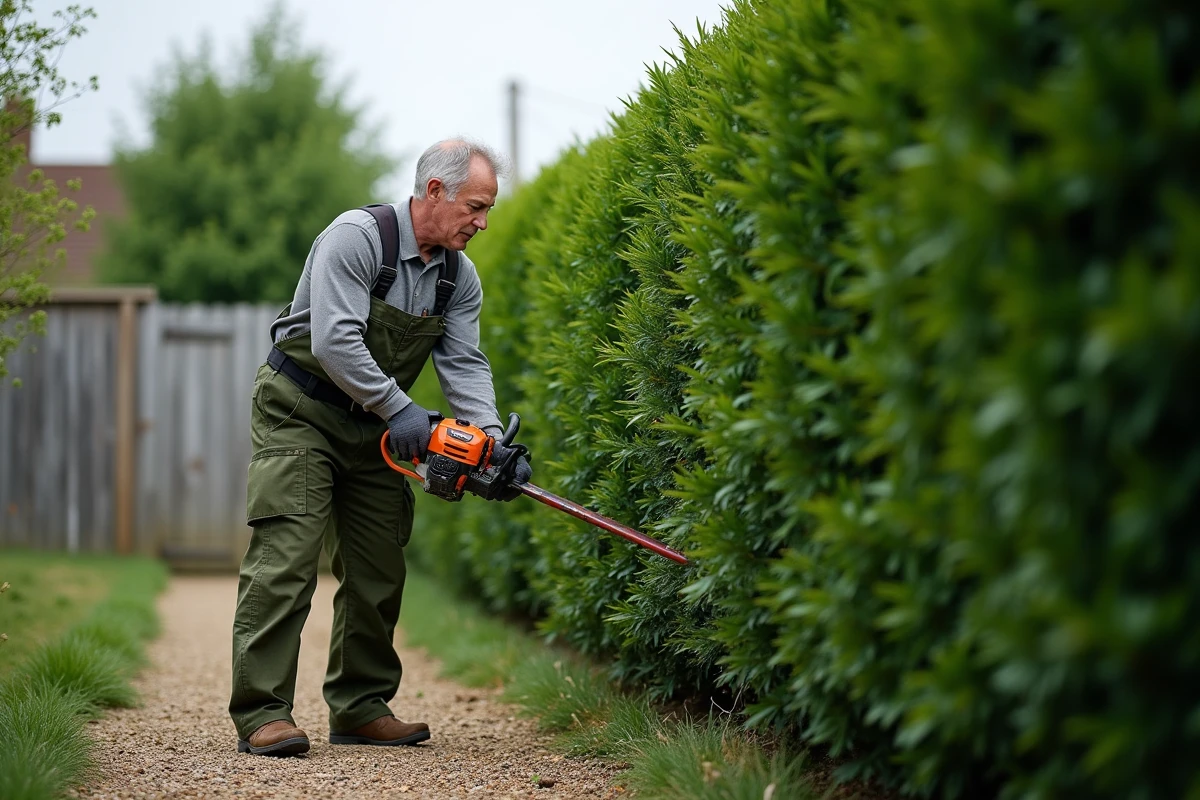
A hedge that is too wide poses a structural problem before it becomes an aesthetic issue. The excess thickness deprives the base of light, encourages interior thinning, and complicates each trimming session. Reducing this width without damaging the hedge requires understanding how the plant heals, which tools to use, and at what pace to intervene.
Reducing the Width of a Hedge: The Principle of Progressive Trimming
Cutting half of the thickness all at once may seem effective, but the result is often a wall of dead wood exposed to the sun, unable to produce new shoots. Most hedge shrubs (thuja, laurel, hornbeam) only regenerate their buds on relatively young wood.
The recommended method is to reduce the thickness by one third per year, over two to three years. In the first year, trim only one side, retreating the face by about one third. The following year, work on the other side. In the third year, level everything out.
This pace leaves the hedge with enough leaf surface to ensure photosynthesis while stimulating regrowth on the exposed wood. To effectively trim a hedge that is too wide, this gradual approach makes the difference between a hedge that densifies and one that declines.
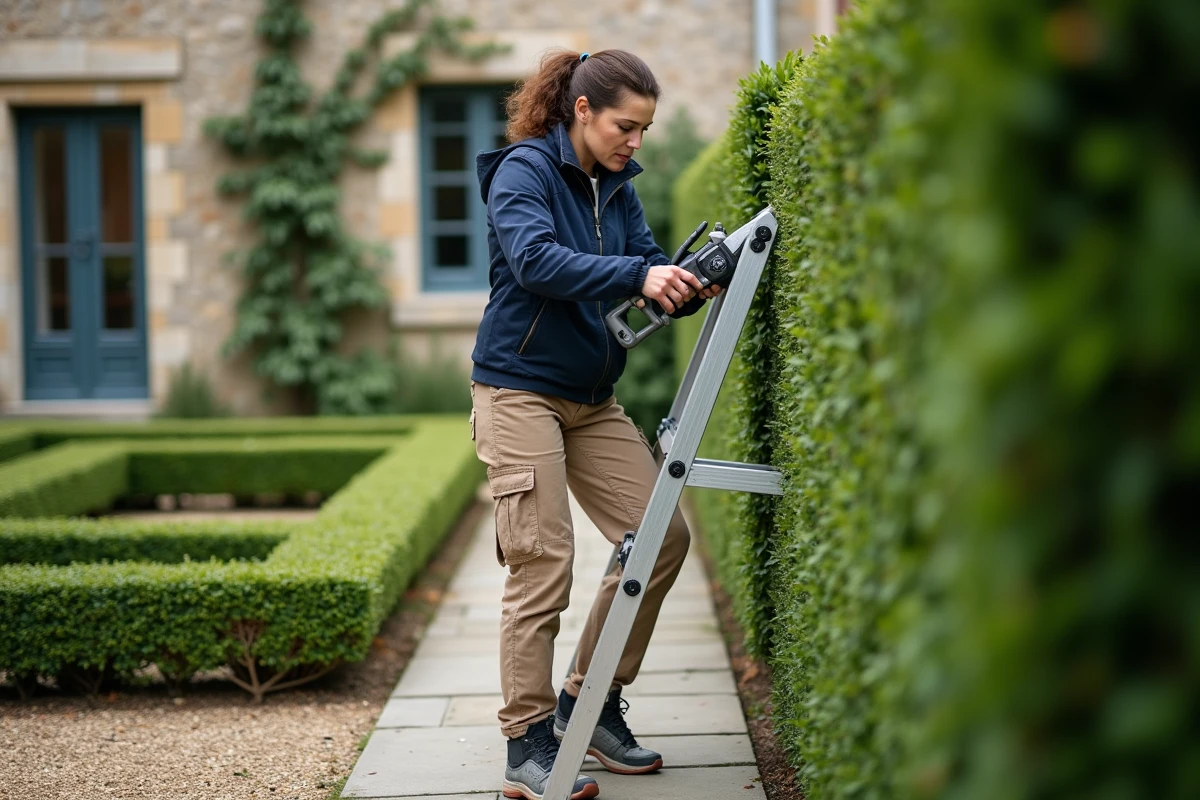
Trimming a Hedge That Is Too Wide According to Species: Adapting the Cut to the Plant
Not all species react the same way to a drastic reduction. Confusing a privet with a Leyland cypress at this stage risks killing the hedge.
Species That Tolerate Partial Rejuvenation
Privet, hornbeam, and beech vigorously regrow even after a severe cut. For a privet hedge that has become too wide, a partial rejuvenation cut at 30-40 cm from the ground at the end of winter allows for a healthy restart. Then, select the best-oriented shoots to reconstruct a controlled thickness.
Boxwood and cherry laurel also tolerate significant cuts, provided that interventions are made outside of frost and heatwave periods.
Species That Do Not Regrow on Old Wood
Conifers like thuja or Leyland cypress do not regenerate buds on brown wood. Cutting beyond the green zone creates a permanent hole. For these species, progressive trimming by thirds remains the only viable option. In the case of a conifer hedge that is already very bare at the base, partial replacement with young plants may be more realistic than relentless trimming.
Suitable Tools for Reducing the Thickness of a Hedge
The width of a hedge involves cutting branches thicker than during regular maintenance trimming. A standard electric hedge trimmer reaches its limits on branches over two centimeters in diameter.
- A thermal or battery-operated hedge trimmer with a blade of 60 cm or more is suitable for lateral faces and semi-woody branches, provided the blade has sufficient tooth spacing to accommodate thick branches.
- An anvil or ratchet pruner is necessary for individual branches exceeding three centimeters in diameter, typical of the heart of a hedge that has been neglected for several years.
- A pruning saw (with a curved blade) completes the equipment for rejuvenation cuts or selectively removing structural branches.
Working with an undersized tool unnecessarily tires you out and produces splintered cuts that heal poorly. The right reflex: start by clearing the large branches with the pruner, then smooth the surface with the hedge trimmer.

Trimming Schedule for a Hedge That Is Too Wide and Nesting Constraints
The choice of timing affects both plant recovery and respect for wildlife. Two windows stand out clearly.
The end of winter (February-March) is the most suitable period for a significant width reduction. The sap is still descending, birds have not yet nested, and the spring regrowth will quickly cover the cuts.
A finishing trim can take place in September, once the nesting season is over, to correct the disorderly regrowth from summer.
The period to avoid strictly runs from mid-March to the end of July. Following reinforced recommendations related to the protection of nesting birds, several local authorities have incorporated this restriction into their local regulations. The OFB and LPO explicitly advise against trimming hedges during this window, including garden hedges. A fine may be imposed for the destruction of nests of protected species, even unintentionally.
Cutting Technique to Maintain a Narrow Profile After Reduction
Reducing the width is pointless if the hedge regains its thickness in two seasons. The cutting profile plays a direct role in controlling future bulk.
A hedge trimmed in a trapezoidal shape (base wider than the top) receives light evenly across its height. This profile limits thinning at the base, a classic problem with hedges trimmed in a strict rectangle where the top eventually shades the lower parts.
The difference between the base width and the top width does not need to be dramatic. A few centimeters are enough to modify the light distribution. In practice, stakes connected by a string are positioned at both ends of the hedge to mark the inclined cutting line, then this guide is followed with the hedge trimmer.
After each reduction pass, adding compost at the base of the hedge helps the plant mobilize the energy needed for regrowth. Hedges subjected to heavy trimming draw more from their root reserves, and impoverished soil slows down the reconstitution of foliage.
The width of a hedge cannot be corrected in an afternoon. Accepting a plan over two or three years protects the plant, respects nesting cycles, and produces a dense result rather than a woody skeleton. The only shortcut that works is to choose the right tool for each branch size and to maintain the trapezoidal profile from the first cut.